Of Faith and Fate
BY: ALORA
Images by Winta Assefa
Let’s play a game: I give you a scene, and you imagine it. So get this. You’re a teenager, Muslim, and a girl, and you live a fairly decent life. Got it? There’s more. You get good grades, you have a couple of friends, and you stay out of trouble. That’s basically my life. And that’s all you need to know about my background before we get started on the story. And you already know this, but in case you forget, like me, I’m Alora.
I admit, I don’t look like your typical ‘Muslim’ girl. I don’t wear a hijab outside of prayer times and the masjid, I’m not very conservative, and I don’t constantly talk about my religion and how hard it is and how much I sacrifice. I don’t really understand the people who do that anyway, since it just confuses other people and makes things uncomfortable. Besides, I haven’t sacrificed anything. Sure, I don’t eat pork, or smoke, or drink, or do any drugs, but I really wouldn’t do that stuff regardless. What’s so fun about messing up your body for an hour or two of just acting stupid and not even remembering it? But that’s besides the point.
Admittedly, there was never a definitive point at which I realized I was queer. It was just a thing that was there, so I rolled with it. Besides, I was in eighth grade and swimming in homework at the time, so I didn’t really care for anything that couldn’t boost my grade. So bisexuality and I coexisted peacefully for the majority of grades eight to nine. Ramadhan rolled around in May, so I fasted, offered prayers and duas, and read the Quran.
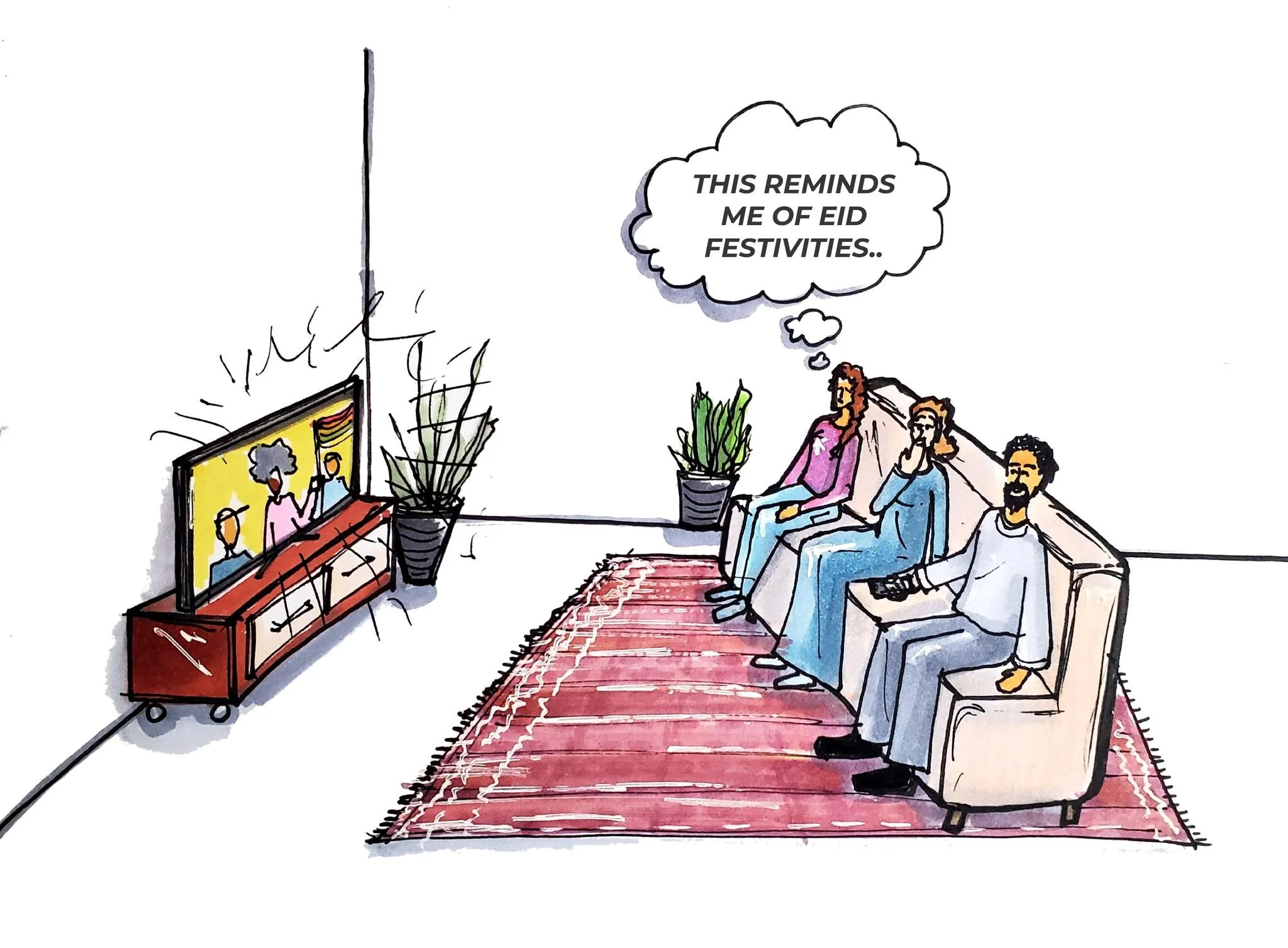
One day, I was 14, and I saw the TV glow with the first Pride parade I’d ever seen. Drag queens, butches, bears, banners and signs, you name it. Everyone looked so happy. There was laughter, food, smiles, whistles and music. It looked so fun. It reminded me of the Eid festivals my parents would take my siblings and me to when we visited Pakistan. So I turn to my parents, and I’m about to remind them of it. About to give them the connection, when they shut the TV off with anger that rivalled my uncles. I didn’t get it. I still don’t get it. Why did the sound of these people’s laughter make them so angry? Why were their clothes so rage-inducing? How could they not see our family and friends in the laughter and smiles that were present on the screen? I don’t think I’ll ever know, and I won’t pretend I will. But I was fourteen. And their anger was scary. So when my dad bitched about sinners and my mom made me promise I wouldn’t turn out like them, I agreed. Sometimes I wonder if things would be different today if I was a quicker talker.
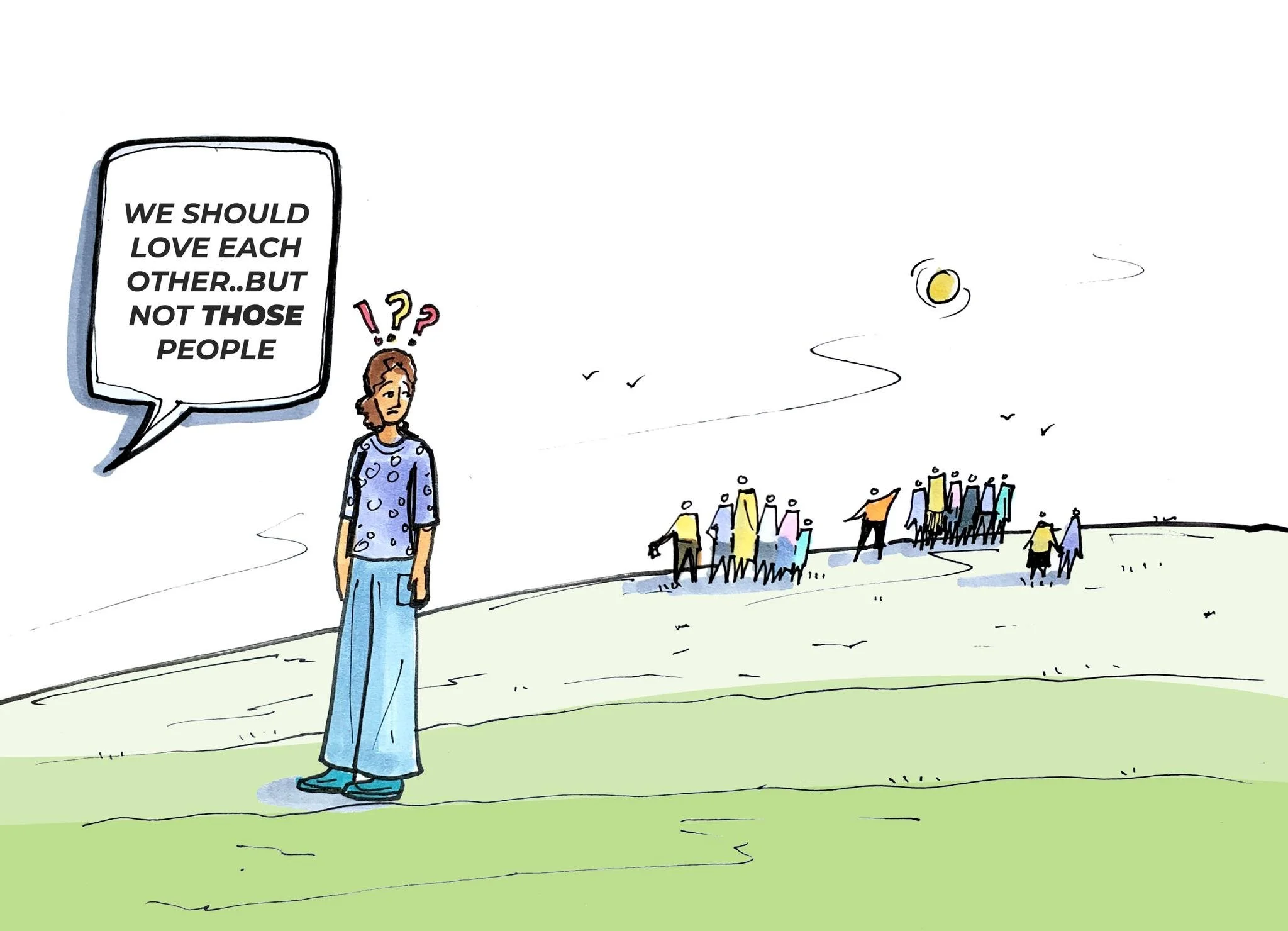
And that’s the weird thing about growing up religious. Everyone tells you that gods word is to love each other, to care for each other, and to hold each other up, no matter how different you are, but when you try and actually do it in a way that matters, you’re told that you’re doing it wrong, and that you shouldn’t help those people. Those people, who are different from you in a bad way. And they never tell you why that bad way is bad, so you live your life carrying the bad inside of you, and you spread it around. Or you’re like me, who tried to toss out the bad your parents gave you, only to discover that it had woven itself into your bones, into the marrow of your being the way you would weave thread into a rug. It’s that bad that is passed on for generations that we have no business carrying, but you can’t just get rid of it. It’s woven so deeply that you can’t see where the bad starts and where you end. But you’ve gotta get through it. You need to ditch the bad as best you can, because there’s too much of it in the world anyway, so you can’t go spreading it, especially if you know it’s bad. But I won’t lie and tell you that once you start, it’s easy. It’s hard. It starts hard, and stays hard for a long while. Unlearning is hard because we don’t like being wrong. But we need to learn to be better. And that starts out hard. Trust me on that.
Want to hear a secret? Well, if you know me well enough, you’ll know it’s no secret. I didn’t get imposter syndrome. I didn’t feel inadequate or sinful or dirty, or anything any other kid with religious guilt will tell you. Because I believed that if Allah loved us enough to send hundreds of messengers to guide us, with countless books to teach us, then surely Allah loved me enough to overlook the part of me that may or may not have been strange. The part that didn’t fit quite right. That’s what I thought, what I believed in, with all my heart. At first.
Let’s play the game again. Get this. You’re fourteen years old, and you’re going with your mom to your local masjids weekly Halaqa, and it’s just you with her because your older sister is angsting despite being a grown 18 year old and in college, and your little siblings are too rowdy and no one can ever actually pay attention when they come along, so it has to be you with your mom because you’re the only kid who actually listens and likes going to these Halaqas, and the food they serve is pretty good too. And you don’t know what this Halaqa is about because your mom is the one in the masjid group chat and she never reads the posters, so you’re sitting there expecting to be talked to about the Prophet, or virtues, or some “Love thy neighbour” stuff. But you don’t mind. And you forget that it’s June, now publicly considered Queer Pride month, and that just two days ago you’d been at school watching them raise the pride flag.
Because this was about the Prophet and virtues, right?
Wrong.
This was about the people of Sodom. Yeah, that Sodom. From the Bible, which is more mainstream than the Quran, but this is the story of a Muslim, so maybe best to stick to the Quran here. But yeah. And you hear this story that you’ve only ever read in a children's book, and that version was also highly sanitized, and everyone is acting like talking about queer people and same sex couples will cause the Masjid to burn down right then and there. Well, it doesn’t. What does happen is that you have to sit and listen to an Imam who you thought was a friend talk about how people you quietly identified with were sinners, and evil, and freaks and all sorts of stuff that gets people killed by divine judgement. And you’re sitting there, but you’re not actually hearing these things. You’re in the room, and you get the scratchy, patched up microphone that sometimes squeaks for no reason flowing in one ear and out the other. And you don’t remember the rest of the night because those words keep playing over and over in your mind until you forget that the Imam had stopped talking, and somehow you get home and you’re in your bathroom when it all just comes forward like it was happening right that second. And you don’t cry. You can’t cry because what the hell even happened? What were they talking about? These were the same people who insisted that you help them hand out flyers for a homeless shelter accepting donations because everyone was children of Allah, and everyone deserved good. How could you have heard them say all these things about people you might just see on the street? The person who makes the sandwiches at Subway? The kid who works at Babas Pizza who your Imam knows by name because that’s always where the summer and winter camp get their lunches from?
How could they say that about those people?
About you?
Well, that’s what had happened to me directly after I made my peace with my supposed bisexuality. Shocking twist, I know. And while we’re on the subject, Sodom was destroyed for committing every sin in the book. And it wasn’t a queer free for all. In fact, it was actually full of straight, cis people who sexually assaulted travellers for power. But I didn’t know that until I started looking at the translations of the Quran myself, which would be a good two years into the future. So, after all this, I was understandably terrified.

For the longest time after this, I thought being queer was a sin punishable by divine force. So, like any normal religious kid with queer guilt, I prayed to Allah to take my queerness away so I wouldn’t end up dead in an earthquake, like Sodom. Funny enough (I’m allowed to laugh, this is my story), it didn’t work. In fact, I just became more gay. Where I had originally suspected I was just bisexual, I was, in fact, lesbian. And genderqueer. Allah works in mysterious ways, huh. Now, obviously, I was still trying to be homophobic, so you can imagine my absolute horror upon realizing my prayers were answered backwards. So my next course of action is to assume that Allah has renounced me and taken away my status as a Muslim, because I can’t POSSIBLY be Muslim if I’m queer, so obviously I’m being punished for even suspecting myself of queerness. So. Praying the gay away hadn’t worked, and had, in fact, made it worse, so I tried other options.
Now, dear reader, I am in absolutely no way a scholar of Islam. Nor am I an expert in mental health. However, I found out through a grapevine that if a Muslim dies a long and painful death, Allah forgives all their sins. So, I obviously needed to find some way to die painfully so Allah feels bad and lets me pass to paradise without my queerness.
I was too much of a coward to actually self harm, but I got more reckless. I forged signatures to go on trips in hopes of getting killed, used knives carelessly, ran down stairs, crossed the street without looking, I even scraped off pieces of my popcorn ceiling because I thought it was made of asbestos, and asbestos gave people cancer, so if I got cancer, I’d suffer a horrible death, right? Wrong. And none of that even worked anyway, so all these books and shows need to stop making killing yourself look easy. That stuff’s hard if you don’t own razors or dangerous medicine. And before you ask, no I didn’t get help, largely because I don’t want my parents to worry, and I’m normal (mostly) and still alive now, so I’ve gotta be doing something right. I’m not taking criticism on it either.
Okay, I know, I know. You came here for the good ending, because I’ve set this whole thing up to have a good ending, and for the record, the ending right now is pretty good. Sure, I haven’t told my parents, and I might never be able to tell them, but those two don’t even know my favourite colour, and my dad can’t even remember the name of my school, so that’s not a big deal. It’s not the first secret I’ve kept from them, and absolutely won’t be the last. I can live with that. But before we get to the ending, we need to talk about how I got myself out of my rut of suicidal ideation and religious guilt. So don’t laugh, because it sounds stupid, but it’s not stupid if it works.
Alrighty. At the time, I was an avid Tumblr user. Yeah yeah, dead social media, whatever. The only reason I was on Tumblr was because I didn’t have a phone number, so it was the only social networking app I could use. Anywho, during my daily “Scroll through religious art with themes of trauma and sex and sin to distract yourself from wanting to kill yourself” time, I stumbled across a long post a mutual had reblogged, titled “Sexuality in Islam.” And I was interested. Because my problem was sexuality, and I was trying to stay in Islam, so maybe this would help me? And it did. It talked about same-sex attraction, trans-affirming healthcare, and how all of it fit into Islam. It cleared up the misconceptions of Sodom, and talked about the reasons behind certain ayats. Two really stuck with me though. The translation read “Do not make unto yourself haram, which is not.” and “Do not use the verses of the Holy Quran to harm others.”. And that got me thinking. Was I making my sexuality haram for no reason?
Was I just punishing myself needlessly? And if I was, did that mean that the people in my Masjid were in the wrong? For using the Quran to harm others? I didn’t know what to think. I was scared, I didn’t want them to get in trouble. Sure, they hadn’t been the best, but they weren’t evil. I didn’t want them to be hurt. And I didn’t really believe it then. After all, anyone could take ayats of the Quran and use them for anything. Maybe the ayats meant something different in context. But, there was a book recommendation entitled Homosexuality in Islam: Critical Reflection on Gay, Lesbian, and Transgender Muslims, written by Dr. Scott Siraj Al-Haqq Kugle. And I made an account on the Internet Archive to read it, and you wouldn’t believe how I felt. To this day I have no idea how to describe it. It felt like someone had reached right into my heart, into the deepest depths of my soul and pulled out exactly what I needed to hear. It was like someone was sitting next to me and pointing at things posted by queer Muslims, and they were smiling at me. It felt like seeing an old friend you still care about. I get that feeling a lot now. When I wear my pendant with Allahs name engraved to Pride events, when I see other queer Muslims, it’s like a piece of my heart reaches its hand out, and a piece of theirs reaches back. A silent declaration of love. Or something like that, I’m not an expert.
I guess this is where it ends? I’m not good at endings. They’re too much like goodbye, and I don’t like that either. And I’m not going away for long. But I really do recommend reading Homosexuality in Islam: Critical Reflection on Gay, Lesbian, and Transgender Muslims, written by Dr. Scott Siraj Al-Haqq Kugle, it’s a good book. Especially if you’re like me, and Muslim. And even if you’re not, just remember that just because the bad is woven into your bones and part of the ground you walk on, you don’t need to carry it around. You don’t need to spread it. And don’t try to argue with me about this. I’m not saying that you can’t feel your feelings. I’m saying that thinking something is one way is no reason to throw around more hurt.
📣 What Did You Think?
We want to hear from you! Your reaction helps us choose the top story of the month and gives the writer some well-deserved love.
Tap a reaction below to tell us how the story made you feel:
ABOUT THE AUTHOR
Hi! I’m Alora, and no, that’s not my real name, but you’re never going to meet me, so that doesn’t really matter. I’m a proud Muslim, lesbian and genderqueer Pakistani Immigrant.
I like coding, I’m a pretty avid artist though I’m not the best at it, and obviously I like storywriting. This isn’t my first writing rodeo, but it is my first time writing these kinds of stories, so bear with me if it sounds like I’m ranting. I like reading in my downtime, and I especially like hanging out with my friends.